



This guide applies to Linux-based server environments.
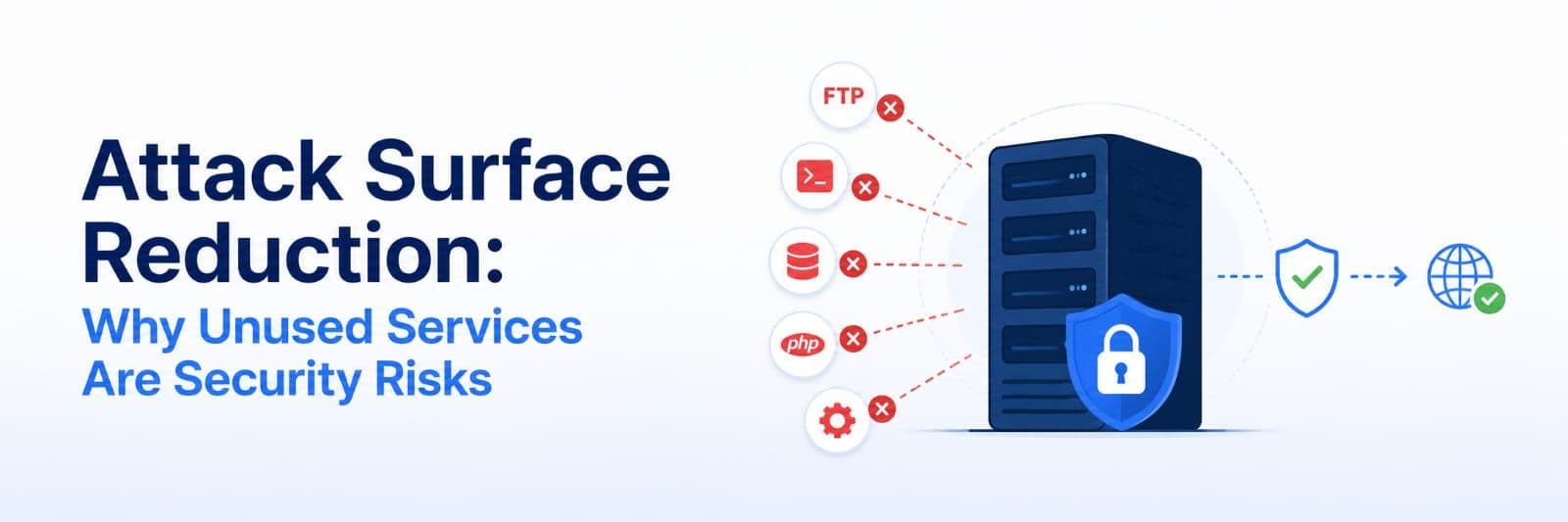
Modern server security is not just about deploying firewalls, enforcing strong passwords, or keeping software updated. One of the most overlooked aspects of infrastructure security is attack surface reduction.
Every service running on a server, every open port, and every installed application creates a potential entry point for attackers. While many of these components are necessary for business operations, unused services often remain active long after they are needed, increasing exposure without providing any value.
In this article, we'll explore why unused services are a security risk, how they contribute to a larger attack surface, and the steps administrators can take to reduce unnecessary exposure.
What Is Attack Surface Reduction?
Attack surface reduction is the practice of minimizing the number of ways an attacker can interact with a system.
A server's attack surface typically includes:
- Running services and daemons
- Open network ports
- Administrative interfaces
- Installed software packages
- APIs and web applications
- Containers and supporting services
The larger the attack surface, the more opportunities attackers have to discover vulnerabilities, misconfigurations, or weak access controls.
Security frameworks and hardening standards such as CIS Benchmarks and DISA STIGs consistently recommend disabling unnecessary functionality because services that are not required for operations still require monitoring, patching, and security oversight.
Why Unused Services Create Security Risks
Unused services are often overlooked during routine maintenance. They may have been installed for testing, troubleshooting, migrations, or legacy application support and simply never removed.
Common examples include:
- Legacy FTP services after migrating to SFTP
- Old phpMyAdmin installations
- Unused monitoring dashboards
- Deprecated PHP versions
- Test environments exposed to the internet
- Database services listening on public interfaces
The challenge is that attackers do not care whether a service is actively used by your team. If the service is accessible, it can be scanned, fingerprinted, and targeted.
A well-known example is Redis instances exposed on 0.0.0.0 without authentication. Misconfigured Redis deployments have been repeatedly abused for data theft, cryptomining, and unauthorized access, demonstrating how a forgotten or poorly configured service can become a significant security risk.
An outdated or misconfigured service may expose vulnerabilities that provide an attacker with an initial foothold into the environment.
How Attackers Discover Exposed Services
Attackers rarely search for individual servers manually. Instead, they rely on automated scanning tools that continuously probe internet-facing systems.
These tools identify:
- Open ports
- Running services
- Software versions
- Misconfigured endpoints
Even a service that receives no legitimate traffic may still be detected by automated scans within hours of being exposed.
This is why reducing unnecessary exposure is often more effective than simply adding additional security controls.

Common Signs of Unnecessary Exposure
Many organizations unknowingly accumulate unused services over time due to infrastructure growth and operational changes.
You may need a security review if:
- The server has undergone multiple migrations or upgrades
- Temporary troubleshooting tools were installed
- Several administrators have managed the environment
- Legacy applications have been retired
- Firewall rules have not been reviewed recently
- Services automatically start after reboot without verification
Regular audits help identify these overlooked components before they become security liabilities.
How to Audit Running Services
The first step in attack surface reduction is understanding what is currently running on your systems.
List Active Services
systemctl list-units --type=service --state=runningReview the output and verify that every service has a legitimate business purpose.
Check Listening Ports
Using ss (preferred on modern Linux systems):
ss -tulnpUsing lsof for process-level visibility:
lsof -iUsing netstat (legacy tool, retained mainly for compatibility with older systems):
netstat -tulnpThese commands help identify services that are actively listening for network connections.
Perform External Validation
Internal audits are important, but external visibility matters even more.
Use Nmap from a trusted external system:
nmap -sV -p- your-server-ipThis scans all TCP ports and provides a more complete view of exposed services from an attacker's perspective.
Best Practices for Attack Surface Reduction
Reducing attack surface should be part of every server hardening strategy.
Disable Unused Services
If a service is no longer required, stop and disable it.
systemctl stop service_name
systemctl disable service_name
To prevent accidental or dependency-triggered restarts, consider masking the service as well:
systemctl mask service_nameRemove Unnecessary Software
Unused packages can introduce vulnerabilities even if they are rarely used.
On Debian-based systems:
apt remove package_nameBefore running `apt autoremove`, review the packages carefully. It automatically removes unused dependencies and may remove components still required by applications if not reviewed properly.
apt autoremoveOn RHEL-based systems:
dnf remove package_nameFor older RHEL and CentOS releases:
yum remove package_nameRestrict Network Exposure
Not every service needs to be accessible from the internet.
Consider:
- Firewall restrictions
- IP allowlisting
- VPN-only administrative access
- Binding services to localhost
UFW example:
block MySQL from public access:
ufw deny 3306 firewalld example:
firewall-cmd --permanent --remove-port=3306/tcp
firewall-cmd --reload
Note: Docker can bypass UFW rules by default because it manages its own iptables chains. Containerized services may still be reachable even when UFW rules appear to block them. Always validate externally after making firewall changes.
Review Services Regularly
Attack surface reduction is not a one-time project. Infrastructure changes frequently, making regular audits essential.
Quarterly reviews of services, ports, firewall rules, and installed software can significantly reduce unnecessary exposure.
Conclusion
Server hardening is often associated with patching, monitoring, and access controls, but reducing unnecessary exposure is equally important.
Unused services, legacy applications, and forgotten daemons can quietly expand your attack surface over time. By regularly auditing services, removing software that is no longer needed, and limiting network exposure, organizations can significantly improve their security posture.
If it's running, it can be targeted. Effective attack surface reduction starts by identifying and removing what should not be there in the first place.