Essential AWS Cost Optimization Guide to Eliminate Hidden Cloud Waste
Many teams assume that high AWS bills are a direct result of high usage. In reality, that’s rarely the case.
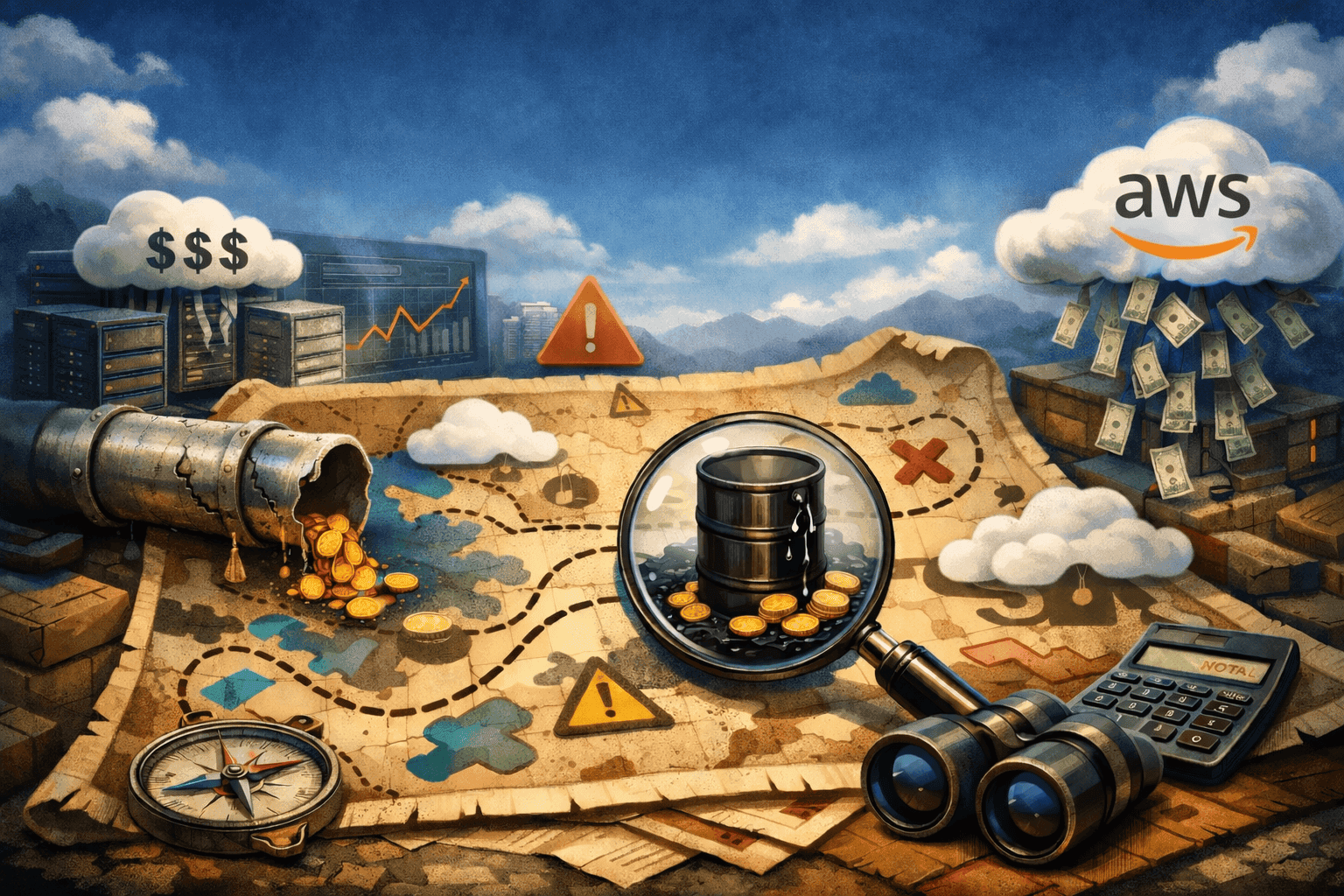
AWS doesn’t charge you for mistakes — it charges you for architectural decisions.
Every default setting, every idle resource, and every missing policy can silently increase your monthly bill. These are not always visible during development, but over time, they accumulate into significant cost leaks.
This guide will help you identify, understand, and fix the most common AWS cost inefficiencies.
Understanding Cost Leaks in AWS
A cost leak is any cloud resource or configuration that continues to incur charges without delivering proportional value.
Common causes:
- Resources left running unintentionally
- Over-provisioned infrastructure
- Lack of lifecycle management
- Inefficient networking architecture
- Missing monitoring or cost controls
Quick Optimization Checklist
Before diving deep, ensure you have these basics in place:
1. Enable Cost Monitoring Tools
AWS Cost Explorer
Cost Anomaly Detection
These tools help identify unexpected cost spikes before they become expensive.
2. Use Compute Optimization Tools
AWS Compute Optimizer
This provides recommendations for:
EC2 Instance Rightsizing
EBS Optimization
Lambda Memory Tuning
3. Implement Lifecycle Policies
S3 Lifecycle Rules
EBS Snapshot Cleanup Policies
Even simple lifecycle automation can significantly reduce storage costs.
4. Perform Weekly Resource Audits
Regular audits help detect:
Unused EC2 Instances
Detached EBS Volumes
Idle Load Balancers
Old Snapshots
Where Your AWS Money Actually Goes (And How to Fix It)
1. NAT Gateway Costs
Problem
Charged per hour plus per GB of data processed. Often used unnecessarily for private subnet access.
Impact
One of the most expensive hidden networking costs.
Fix
- Replace with VPC Endpoints for AWS service access.
- Use NAT Instances where appropriate.
2. EC2 Auto Scaling Groups
Problem
Instances running at only 10–20% utilization because of poor scaling policies.
Impact
Paying for unused compute capacity.
Fix
- Rightsize instance types.
- Use Spot Instances.
- Optimize CPU, memory and custom metric scaling.
3. Amazon RDS
Problem
Over-provisioned instance sizes and always-on databases for non-production workloads.
Impact
High monthly database costs with low utilization.
Fix
- Downsize based on CloudWatch metrics.
- Use Reserved Instances.
- Schedule start/stop for non-production databases.
4. Amazon S3 Storage
Problem
No lifecycle policies. Data remains in the Standard storage tier indefinitely.
Impact
Gradually increasing storage costs.
Fix
- Move data to S3 IA.
- Archive to Glacier or Deep Archive.
- Delete obsolete objects automatically.
5. Load Balancers
Problem
Multiple underutilized load balancers and high LCU usage.
Impact
Hourly and usage-based billing.
Fix
- Consolidate load balancers.
- Optimize routing rules.
- Remove unused ALBs and NLBs.
6. EBS Volumes & Snapshots
Problem
Detached volumes and old snapshots continue generating charges.
Impact
Silent but continuous storage billing.
Fix
- Delete unused volumes.
- Automate snapshot lifecycle policies.
- Use gp3 instead of gp2.
You don’t need to reduce usage. You need to eliminate waste.
Most cost optimization efforts fail because teams focus on reducing usage rather than fixing inefficiencies.
Best Practices for Ongoing Cost Optimization
Tag Everything
- Enables cost allocation and tracking
- Helps identify unused resources
Automate Cleanup
- Lambda scripts for idle resource detection
- Snapshot cleanup
- Instance scheduling
Use Budgets and Alerts
- Set AWS Budgets
- Trigger alerts on thresholds
Review Architecture Regularly
- Conduct periodic Well-Architected Reviews
- Focus on the Cost Optimization pillar
When to Consider a Professional Audit
If:
- Your AWS bill is unpredictable
- Costs are growing without a clear reason
- You lack visibility into resource usage
Then a structured audit can uncover hidden inefficiencies,
unnecessary spending, and architectural issues that are often
overlooked during day-to-day operations.
Cloud cost optimization is not a one-time task—it's an ongoing process.
Focus on these core areas:
Visibility
Automation
Right-sizing
Architecture Improvements
Consistently reviewing these areas can significantly reduce cloud waste
while maintaining performance, scalability, and reliability.